


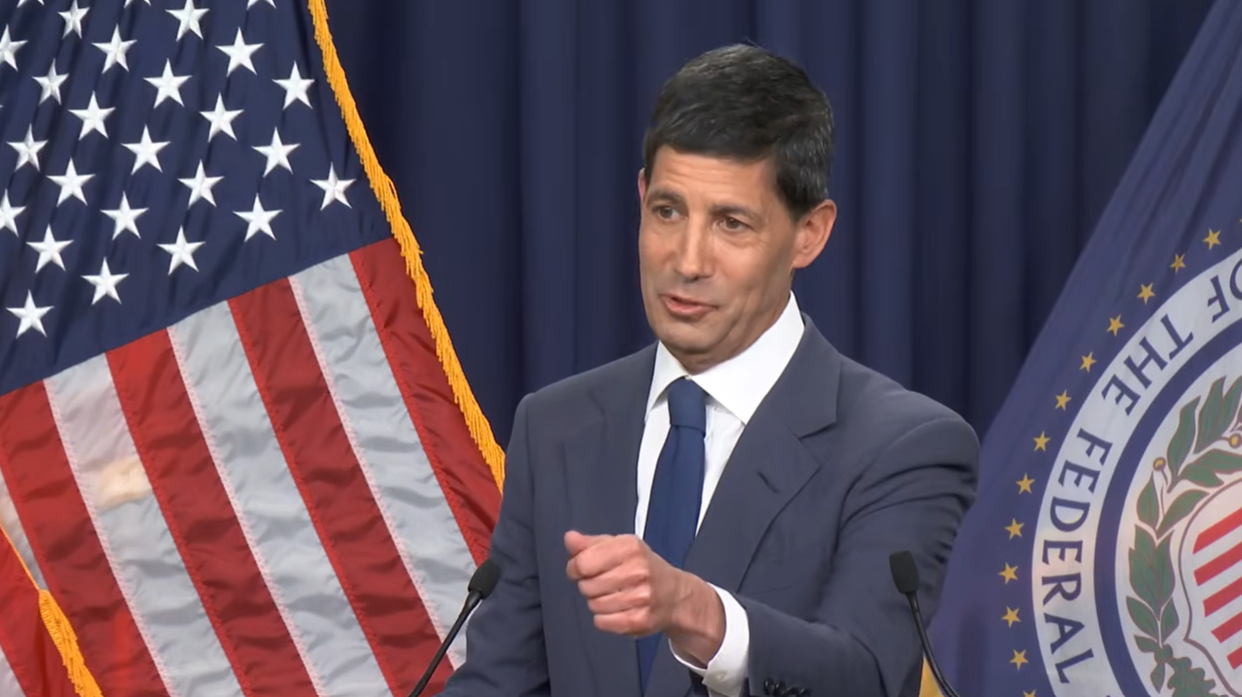
Warsh Doubles Down on Jawboning
Federal Reserve Chair Kevin Warsh started his fight against inflation with jawboning during June’s decision on monetary policy. The performance was all words, many task forces, and no action. Warsh doubled down on the jawboning for July’s decision. The Chair expressed even more resolve for hitting the 2% inflation target while making the measuring stick provisional. PCE remains the benchmark for now, but Warsh suggested the task forces could change that strategy after January and declined to identify the broader set of inflation data informing his judgment.
Warsh doubled down on jawboning by describing a contentious policy meeting while also sidestepping a request to explain the decision to hold rates unchanged. Warsh also refused to provide any insight on the dissent from the three of twelve voting FOMC members who each voted for a quarter-point rate hike (Beth M. Hammack, Neel Kashkari, and Lorie K. Logan). He even declared as a counterpoint that there was “a lot of agreement on the hard questions.” He also heard a lot of “commonality” on the key questions he mentioned at the top of the press conference; the answers just had different “leans.”
Finally, Warsh further extended his brand of opaque Fedspeak by countering the image of a Fed fighting over rate hikes with the unanimity on a metaphorical vote for a period of “watchful thinking not watchful waiting.” In either sense of watchfulness, Warsh did not provide specifics about what the Fed is actually prepared to do to finally bring inflation back to target.
The statement itself made the decision to hold rates steady even harder to explain. The FOMC described economic activity as expanding at a solid pace, productivity and capital investment as strong, job gains as keeping pace with the workforce, and unemployment as little changed. At the same time, inflation remained elevated. Yet, the Committee offered no explanation for why this combination of solid growth, stable employment, and above-target inflation justified leaving rates unchanged. Instead, the statement jumped from attributing some price increases to supply shocks straight into more jawboning: “The Committee will deliver price stability.”
Warsh’s declarations about inflation were all the more awkward given he continued to imply that the Fed before his tenure was not serious enough about its inflation target. For context, Warsh consistently describes inflation as a choice, a claim predating his appointment to the Chair. However, he has yet to specify the choices the Fed needs to make beyond the potential recommendations from his various task forces. Instead, he is keen to point out distinctions between the current FOMC and prior ones: “we have begun a new chapter, and we understand that the five-plus years of inflation above target cannot be cured in nine weeks—or by a single month of modest price decreases.”
Warsh introduced one more potential choice without making it specific: the balance sheet. He asked how much accommodation it is still providing even if interest-rate policy remains the Fed’s primary instrument. As with the inflation framework, Warsh posed the question without providing an answer, an intended adjustment, or a timetable.
Passing the Inflation Fight to the Bond Market
One emergent choice could be passing the inflation-fighting baton to financial markets. In his opening statement, Warsh anticipated questions about what the Fed did to fight inflation between the June and July meetings. He pointed out that the Fed’s retreat from the business of forecasting and forward guidance allowed financial markets to react to data instead of the Fed. The result? Higher bond yields that have tightened financial conditions. He used a sports metaphor to emphasize the change in the game: “market participants are learning to play the ball, not the referee—and market prices will continue to respond in the direction and magnitude they see fit.”
While Warsh insisted that “where necessary and appropriate, we will not hesitate to act,” he declined to clarify the conditions under which the FOMC would actually do something about inflation. Still, toward the end of the press conference, Warsh acknowledged that the bond market’s tightening of financial conditions provides “some comfort that we’ve got the ability and capability to deliver.” The coded language suggests that the Fed is willing to let the bond market do part of the inflation-fighting work while the FOMC waits for results.
One perplexed reporter pointed out that the bond market’s higher rates suggested the Fed was falling behind on hiking its own rates. Another befuddled reporter bluntly asked, “Why should rates not be higher today?” Warsh deftly avoided referencing the Fed funds rate and instead chose to point out the “market’s judgement” to take nominal rates higher along the Treasury curve. While the Fed will not allow the market to dictate its actions, the Fed is “observing” markets.
Warsh next pointed out that both the Fed and markets have upcoming decisions to make about interest rates. He tried to make it plain: “Monetary policy matters not just by what we say, or even what we do. Monetary policy matters by how it affects the real economy.” Of all the Warshspeak on the day, that statement stood out to me as the clearest declaration of the Fed’s modality for action in the Warsh era. If the Fed concludes that market is tightening financial conditions in response to inflationary pressures, the Fed will be content to wait for inflation to respond accordingly.
The Bond Market Hears Warsh Loud and Clear
The bond market seemed to get the point. Long-duration Treasury bonds sold off sharply as soon as the Fed’s statement hit the wires and barely stopped to catch a breath for the rest of the regular trading day.

The reaction function for stocks was much more volatile. The S&P 500 (SPY) rallied into and through the statement until someone tapped stocks on the proverbial shoulder and turned attention to the bond sell-off. The S&P 500 sold off sharply in the last hour of trading, falling from a marginal 0.4% gain intraday to a 1.5% loss at the close.

The subtle frustration from the press intensified with every unanswered question. One reporter almost pleaded with Warsh. The reporter pointed out his repeated claims about intolerance for above target inflation while his Fed has yet to take action. In response to the reporter’s request to clarify what he means by “no tolerance for inflation” and the plans to act, Warsh responded by acknowledging the impatience he had heard about this situation. Yet, he still only offered the same menu of jawboning by declaring this Fed is “on the job. We will deliver.” First, the Fed needs to answer a series of hard questions in order to deliver on its remit.
The press’s frustration symbolically boiled over in the last question: “You said you’d be open to having press conferences when there’s news to make. Today, no change in rates. No forward guidance. For the average household, what was the news today?” Warsh’s final non-answer was telling. Warsh first reiterated his commitment to the existing press conference schedule for 2026. He went on to assure the audience that the Fed is “on the case”, and his confidence in the Fed’s ability to deliver on its inflation target was even stronger than when he took the Chair position. He concluded the session by leaving the audience with “the optimism of a new central banker that we’re committed as ever to deliver and to offer an assurance we will.” And with that doubling down, the jawboning came to an end.
Be careful out there!
Full disclosure: long TLT